The Science How to Stretch
How Long
Improve Stretching
Breathing & Stretching
Muscle Physiology
Stop Stretching?
Contraindications
Precautions
Type of Stretching  Static Stretching
Dynamic Stretching
Ballistic Stretching
Passive Stretches
PNF Stretching
Fascia Stretches
Bad Stretching
The Stretches Back Stretches
Calf Stretches
Forearm Stretches
Hamstring Stretches
Hip Stretches
Iliotibial Band
Neck Stretches
Quadriceps Stretches
Shoulder Stretches
Knee Stretching
Sports Ice Hockey
Golf
Running
Swimming
Other Populations Exercises for Seniors
Exercises for Posture
Conditions Hamstring Tightness
Hamstring Injuries
Injury Prevention
Groin Injury
Myofascial Pain
Stretching Pain
Exercise Tools BMI Calculator
Calorie Calculator
Running Calculator
Target Heart Rate
How Many Calories
WW Points Calculator
. Privacy Policy
Disclaimer
About Me
 

Stretching Exercises Guide

Do stretching exercises improve flexibility? If so, what kind of stretches are best? Is it best to do your stretching exercises before a work out, after exercise, or both? Does stretching enhance athletic performance or does it diminish it? Can an athlete prevent injuries with stretching? For answers to these and other questions, keep reading.

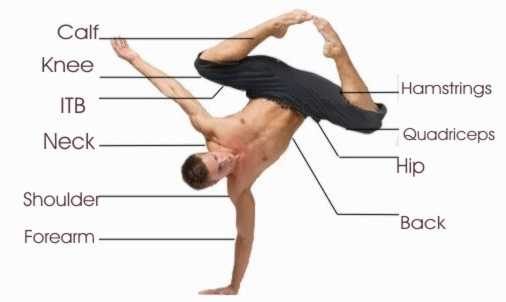
Click on Your Body Part
Click on Your Sport/Activity


stretch me calf stretchstretching for kneesiliotibial bandneck stretchesshoulder stretchesforearm stretcheshamstring stretchesquadriceps stretcheship stretchesback stretchescalfkneehamstringsquadricepshiphipbackforearmshouldershoulderneckwristAchilles
running stretchesGolfing StretchesIce Hockey ExercisesExercises for SwimmersExercises for Posture

Benefits of Stretching

  1. Increased flexibility
  2. Flexibility allows us to accomplish everyday tasks of daily living such as bending over to tie our shoes, or reaching to put groceries away in a cupboard. More demanding tasks such as jumping to throw a basketball or swim 100 meters are also easier if your joints can be taken through a full range of motion with minimal effort.
  3. Flexibility minimizes our risk of injury by allowing joints to move through their full range of motion without putting strain on ligaments or capsular structures.
  4. Flexibility allows for good circulation. This circulation is necessary to provide working muscles with nutrients and to allow for a speedy recovery following exercise.
  5. Flexibility allows you to maintain a good posture. Tight muscles will pull you into poor postures.
  6. Stretching exercises help muscles to relax, relieving tension.

 Free Exercise Tools


Differing conclusions have been dealt amongst dozens of research papers in attempts to answer the above questions.  With this website I hope to address these and other issues based on my own research and clinical experience.  I hope to explain various stretching techniques including static stretching, dynamic stretching, PNF, myofascial release and that done in the practice of yoga.

I include stretching techniques for major muscle groups as well as more advanced stretches for particular sports. Included are illustrated demonstrations of the practical application of various stretches for different muscle groups.

I discuss factors that affect flexibility, although there is differing opinions regarding possible benefits of stretching programs, I will attempt to focus on more generally accepted research findings and less on the controversial claims.  I will attempt to include relevant references. With this website I hope to improve peoples understanding of flexibility and the application of techniques in stretching.


Static stretches

This is the "stretch and hold" type of stretching. This type stretching exercise is safe and is used to increase the range of motion of a joint. Adequate flexibility is necessary to participate in sports and activities of life safely, but there is an optimum time and place for static stretching exercises. Static stretching exercises are just as important to your overall fitness as strengthening and endurance exercises. Click here for more information on static stretching.

Dynamic stretching

Dynamic stretching requires a combination of strength and flexibility. Dynamic stretching is the act of taking a muscle to the end of its range and then rather than holding the stretch contracting the muscle that is being stretched. In this way we can strengthen a muscle in its new range. These stretching exercises help to increase flexibility, strength, muscle coordination and balance. A dynamic stretching program will use more sport specific techniques focusing on movement patterns required in the sport. This type of stretching done before an athletic event will help to improve performance. Click here for more information on dynamic stretching.

Passive Stretching

Passive stretching is achieved as the name implies, through the use of mechanical devices, the assistance of gravity, or use of a partner. Muscles around the joint undergoing a passive stretch remain inactive. Click here for more information on passive stretches.

Ballistic Stretching

Ballistic stretching involves bouncing into a range when the muscle is not prepared or relaxed such that it can enter that range.  This type of stretching can be dangerous if done without supervision or training by a professional. Click here for more information on ballistic stretching.

Proprioceptive Neuromuscular Facilitation (PNF Stretching)

PNF uses the application of neurophysiological principles to the manual treatment and evaluation of neuromuscular dysfunctions.  The goal of using PNF is to facilitate an optimal structural and neuromuscular state. This achieves a better distribution of forces across the musculoskeletal system and reduces inherent functional stress that may be caused by inadequate muscular control. The stretching techniques used by physical therapists familiar with the PNF methods of evaluating and treating movement disorders are well know to improve the outcomes of stretching regimens. Click here for more information on PNF Stretching.

Myofascial Stretching

Fascia is a continuous, three dimensional network of connective tissues that enclose all structures in the human body. The function of fascia is to provide support and transmits forces from muscles across limbs. Fascia connects all tissues of the body, so when fascia is tight or adherent it can alter biomechanics and posture.  Click here for more information on fascia, fascial stretching, and myofascial release.


We need to be careful when jumping to conclusions when it comes to improving sports performance.  The world of competitive athletics tends to promote new ideas with little thought about the evidence in an attempt to stay one step ahead of competition.  Marketing to sports organizations and athletes is often anecdotal and testimonial based. As physical therapists it is our job to support evidence based clinical decision making and cut through all the sales efforts.
Just because static stretching doesn't improve athletic performance doesn't mean we should discontinue it. We know it helps to improve and maintain  range of motion.  We now have research that supports dynamic stretching as a method to improve sports performance, but we don't have guidelines or protocols  for its most effective application.
Probably the most effective means of preventing injury and optimizing sports performance is a combination of all the stretching techniques.


How to Stretch
How to stretch depends on what, why, where, when, and how old you are

How Long to Stretch? 10, 15, 30, or 60 seconds? Lets look at the research.
You ask "How long to stretch? " research tells us it can depend on several factors.

Improve Stretching
Depending on which factor you are trying to influence will determine which method you use to improve stretching.

Breathing and Stretching
Breathing and stretching play an important role in influencing your mental state, emotionally, and physically.

Muscle Physiology
An understanding of muscle physiology helps provide a rationale for stretching and ways to stretch better

Stop Stretching?
What happens when you stop stretching? On this website I discuss why it's important to stretch, how long to stretch, how often to stretch, the benefits of stretching, when you should stretch, etc.

Contraindications to Stretching
The following contraindications to stretching must be observed to prevent injury.

Stretching Precautions
If you think any of these stretching precautions apply to you, seek advice from your physical therapist before starting a stretching program.

Static Stretches
Static stretches are only a small part of an appropriate pre-participation warm up. In some cases, too much static stretching can actually predispose an athlete to injury.

Dynamic Stretching
Dynamic stretching, as the name implies, involves movement and muscular effort for the stretch to occur.

Ballistic Stretching
Ballistic stretching can be dangerous if done without supervision or training by a professional.

Passive Stretches
Passive stretches are achieved as the name implies, through the use of mechanical devices, the assistance of gravity, or use of a partner.

PNF Stretching
PNF stretching is only one part of a system used by physical therapists to help muscular strengthening, stability, neuromuscular control, as well as mobility and coordination.

Fascia stretches
The increasing interest in fascia and fascia stretches is reflected in the literature and use in massage and rehabilitation settings.

Bad Stretching
Bad Stretching is really all about bad timing. Here I discuss the difference between a bad stretch and a good stretch.

Back Stretches with pictures and explanations
Maintaining back mobility by doing a few back stretches on a regular basis is important in terms of preventing back pain.

Calf Stretches
An explanation about the causes and effects of tight calf muscles, and a list of calf stretches

Forearm Stretches - What you need to know to prevent injuries.
Forearm stretches will help maintain a balance between the length of the flexors and the extensors and thereby help to prevent injury.

Hamstring Stretches - your source of information for lengthening those hamstring
Hamstring stretches - Stretching tight hamstrings sometimes seems like a full time job and recurring hamstring injuries are a common source of frustration for many athletes

Hip Stretches - It is common to develop muscle imbalances around the hip
Hip stretches are necessary to address muscle imbalances that can affect gait, posture, spinal stability, and movement patterns.

Iliotibial Band - A common source of hip and/or knee pain
Stretching the iliotibial band is something that people rarely think of unless they are involved in sports or have pain.

Neck Stretches - An exhaustive list of neck stretches
Neck stretches can help neck injuries and poor posture that cause shortening of myofascial tissues, muscle imbalances, and altered movement patterns.

Quadriceps stretches are commonly done prior to any sporting event
Quadriceps stretches are especially necessary in sports that use that muscle group heavily. The quadriceps muscle tends to get tight in people involved in running, soccer, hockey.

Shoulder stretches are necessary to maintain balance in the shoulder and back
Regular shoulder stretches can improve posture, improve function, and make us feel and look younger.

Knee stretching should be done on a regular basis to maintain mobility
Knee stretching is used to improve flexibility.Improved flexibility has always been considered important in the prevention of injuries and there are several studies that have shown this to be the case

Ice Hockey Exercises
Ice hockey exercises that include flexibility training will not only prevent injuries but will also improve your game.

Golfing Stretches
Golfing stretches to improve mobility: If you lack mobility then chances are you will develop compensatory movements that lead to inaccuracy and injury.

Runners Stretches
Runners stretches performed regularly will keep you on the road and help prevent some injuries.

Exercises for Swimmers
Here is a series of exercises for swimmers to address common muscle imbalances that occur because of the repetitive nature of their sport.

Exercises for Seniors
Exercises for seniors must address flexibility, strength, balance, and cardiovascular fitness. Here we will discuss stretching.

Exercises for Posture
These exercises for posture will help address common muscle imbalances that occur because of the postures we assume in daily life.

Tight hamstrings will affect posture, movement, and function.
Addressing tight hamstrings is one of the most important way to prevent injury.

Hamstring injuries are one of the most common to affect athletes
Hamstring injuries can also be one of the most disabling injuries to the lower extremity.

Hamstring Injury Prevention
Hamstring injury prevention is on the mind of any athlete that participates in high intensity or high speed sports. Those involved in kicking, sprinting and jumping sports are at particular risk

Groin Injury
A groin injury can be difficult and time consuming to treat so prevention is always best, and if an injury occurs - rapid diagnosis and treatment are critical.

Myofascial Pain
Before you rush into a stretching program for your myofascial pain be aware of what myofascial pain is, what helps, and what is likely to aggravate it.

Stretching Pain
Forcing a joint beyond its normal range of motion can result in stretching pain, sprains, strains, and tears.

BMI
BMI, Body Mass Index Calculator. Enter your information. This is an easy way of screening the general population for identifying those with increased risk of developing health problems related to obesity.

calorie calculator
Calorie Calculator for Different Activities. Input your data and choose an activity. Easily find out how many calories are burning.

running calorie calculator
Running Calorie Calculator calculates number of calories burned while running. Just enter your information.

target heart rate
Target Heart Rate Calculator. Just input your information and this handy tool will give you your target training heart rate for aerobic exercise

how many calories
How many calories do you need? Here's a free calculator to help you figure it out.

Weight Watchers Points Calculator
Use this Weight Watchers Points Calculator to calculate how many points are in your food using the new and old method.

Privacy Policy
privacy policy

Disclaimer
Disclaimer and legal stuff

About Me
A little about me and this stretching site